Community blogs
Bob Hulse: Learning for a Living

Preston Teng
Narratives, Ankar
0 MIN READ
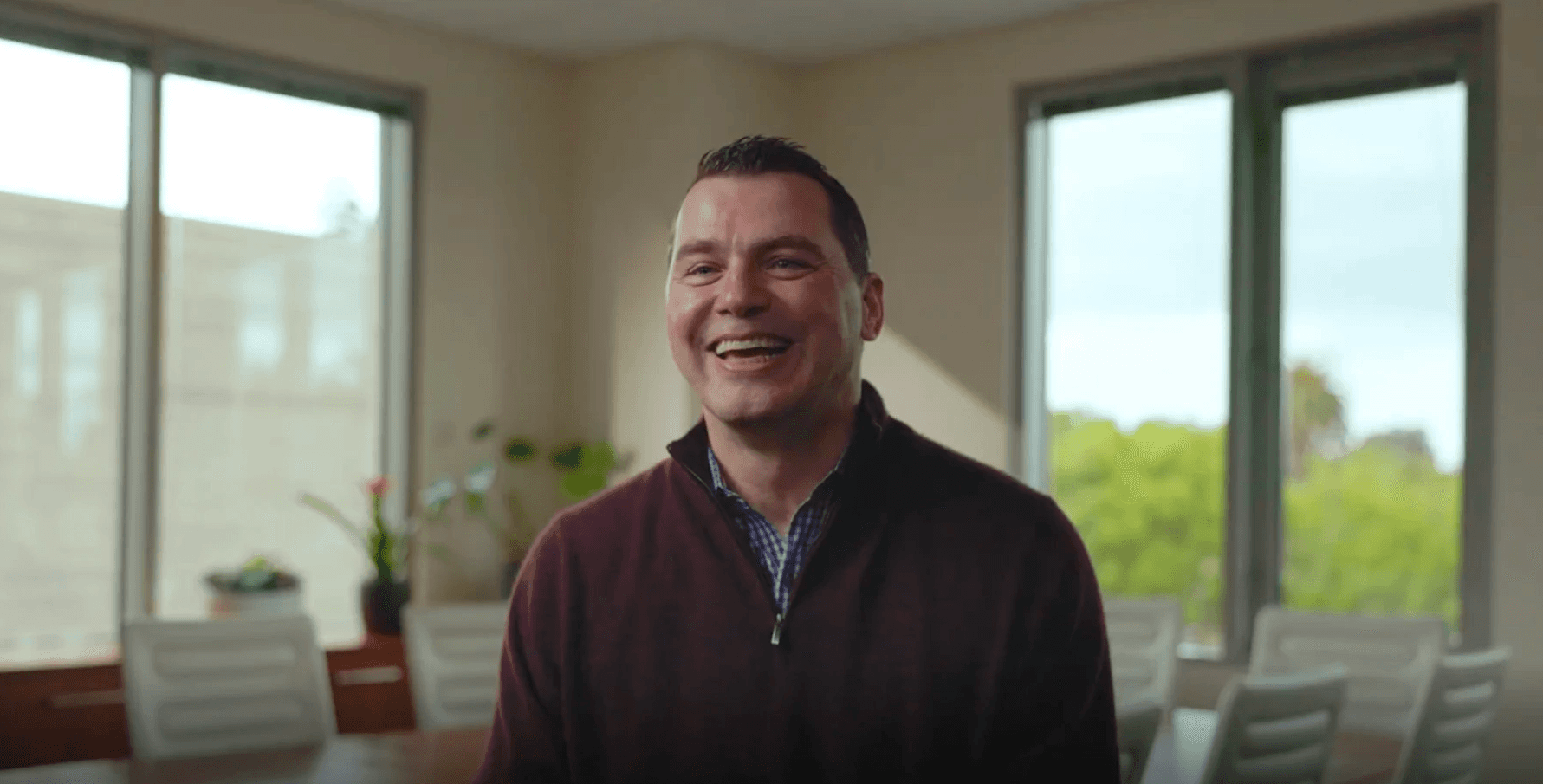
Long before he became one of Silicon Valley’s best-known patent prosecutors, Bob Hulse was a teenager trying to reconcile two very different instincts. He loved both math and science, but he was equally drawn to history, writing, and politics. These were subjects that seemed, at least at first, to belong to entirely different worlds. Then, at 16, a brief conversation with a patent attorney (who was dating his sister at the time, actually) gave those interests a shape he hadn’t considered before.
Patent law, Hulse was told, was “the best job in the world.” It allows you to learn for a living.
For Hulse, now Head of Patent Prosecution and a partner at Fenwick & West, the appeal was immediate. Patent law sat at the intersection of two instincts that rarely coexist comfortably in the same person: the technical urge to understand how things work and the human urge to explain them clearly. Decades later, he still describes his work to be less like a lawyer, but more like a translator.
“Whenever my kids ask me about my job,” he says, “I tell them that I learn how things work and explain that to other people.”
That deceptively simple description captures something essential about patent practice. Patent professionals often occupy a strange role in the innovation economy: close enough to invention to understand it intimately, but far enough away that their contribution is largely invisible to the public. Inventors become synonymous with breakthroughs. The patent professionals who help to shape, frame, and protect those ideas rarely do.
Hulse seems comfortable with that arrangement. He speaks about patents less as trophies, but more as exercises in synthesis and learning. What appeals to him is the opportunity to work alongside brilliant people and stay close to technologies years before they enter the public consciousness. The work, he says, is not about mastering an entire field (which is admittedly impossible given the pace and breadth of modern technology), but about quickly locating the genuinely novel idea hidden inside a much larger body of existing knowledge.
As Hulse puts it, “We don’t have to learn the stuff that’s known. We only have to learn the stuff that’s unknown.”
That mindset has allowed him to move fluidly between technologies over the years, from social networking infrastructure to quantum computing. Recently, one of his clients won the Nobel Prize in Physics for work related to quantum computing, the kind of deeply technical field patent attorneys are often required to absorb with remarkable speed. He is quick to clarify that he could never walk into the lab and build the technology himself. But that is not the job. The job is understanding enough to identify the invention, isolate the novelty, and explain it in a way another expert could reproduce.
Early in his career, at a now-defunct patent boutique, Hulse worked across nearly every corner of intellectual property law, including trademarks, litigation, and prosecution. Litigation had its appeal, particularly the intellectual sparring, the legal writing, and the strategy. But over time, he found himself increasingly drawn away from the constant opposition and argument that defined it. Patent prosecution, on the other hand, offered something different. Rather than simply advocating for a position, Hulse liked that prosecution allowed him to refine ideas, reshape claims, and work toward outcomes that are defensible.
“I like that prosecution is a process of refinement rather than pure advocacy,” he says.
As Hulse describes it, the work is partly technical analysis and partly structured storytelling, combining the rigor of engineering with the challenge of translating complicated ideas clearly enough for others to understand. If a patent examiner rejected a claim and the examiner was right, Hulse could amend the claims, reshape the argument, and refine the invention’s boundaries until the invention itself was more clearly defined. The process felt iterative rather than combative. More importantly, it kept him close to inventors.
After spending years in Southern California, moving north has gradually changed the way that Hulse thinks about legal practice itself. Around Palo Alto and San Francisco, startup culture is ambient. He found himself immersed in a culture of constant reinvention, one that is overheard in coffee shops, embedded in casual conversations, and carried through investor decks and product launches alike.
“It’s just in the water here, this entrepreneurialism,” he says.
Hulse has absorbed some of that restlessness. The way he practices today, he says, has evolved significantly over the last several years. The broader profession has evolved too. When Hulse started practicing around 2000, patent prosecution was still shaped by older boutique-firm traditions and formulaic drafting styles. Over time, as intellectual property became more strategically important, prosecution grew more sophisticated and intentional.
Few examples illustrate that evolution better than Hulse’s work with Facebook during the company’s explosive early growth. He helped prosecute patents around technologies that now feel almost impossibly ordinary: the News Feed, the Like button, the architecture of social interaction online.
In hindsight, those products appear inevitable. At the time, they did not.
“When the News Feed came out,” Hulse recalls, “there were all these articles about how creepy it was.”
That tension, between obviousness in retrospect and novelty in the moment, sits at the heart of patent law. The challenge was not simply documenting Facebook’s products, but identifying the technical innovations hidden underneath familiar user behavior. Social networking patents, Hulse argues, are often harder than deeply technical engineering patents because the inventions are conceptual rather than mechanical. The difficulty lies in isolating what is actually patentable inside an experience users perceive as intuitive.
“Quantum computing patents are easier in some ways,” he says with a laugh.
Now, like the rest of the legal industry, patent law is entering another period of transformation through AI. Hulse approaches the shift with a mix of enthusiasm and caution.
He already uses AI constantly. It has replaced some of the early-stage research and search tasks that once required hours of manual work. But he rejects the idea of AI as a one-click replacement for legal judgment. Instead, he describes it more like an intelligent collaborator: a second set of eyes, a way to surface issues faster, a tool for accelerating analysis without replacing discernment.
“There is still the element of human judgment which you can’t replace,” he says.
He is particularly interested in how AI could expand the scope of work patent attorneys can realistically offer clients. Certain analyses, such as freedom-to-operate studies, landscape reviews, and risk assessments, have historically been too expensive for many startups to justify. If AI lowers those costs meaningfully, entirely new categories of strategic counseling could become commercially viable.
That possibility feels especially relevant in a profession built around helping others navigate uncertainty. Patent professionals spend much of their careers interpreting the future: what technologies will matter, what ideas are defensible, and what innovations are substantial enough to protect.
Ultimately, for Hulse, the work still comes back to curiosity. He once imagined retiring at 45 to teach high school physics and open a brewpub. He is now 51, still practicing law, though he admits the brewing part may yet return when his sons are older. These days, cooking has replaced beer-making as his main hobby, another system to tinker with and another craft shaped by experimentation and iteration.
The impulse behind all of it feels remarkably consistent: a fascination with systems, experimentation, and the iterative process of refinement.
read next

Is the PHOSITA real?
By Michael Antone, Counsel at Nemphos Braue LLC
Read now
Your Patents Are an Asset Class. Most Companies Treat Them Like a Filing Cabinet.
By Seth Cronin, ipCapital Group
Read now
Beyond Results: AI Prompting Strategies for Defensible Functional Claiming
By Joel Meyer, Chief Corporate and IP Counsel at Transformative Optics Corporation
Read now