BLOGS
Enhanced Drafting in Ankar with Native Word compatibility
Wiem Gharbi
Co-founder

Today, we're introducing a completely redesigned editing experience in Ankar for seamless compatibility with Microsoft Word, further enhancing our existing suite of advanced document editing capabilities.
High-fidelity Word compatibility
For patent professionals, Word documents are the standard for exchanging patent work products. Applications are reviewed by partners, shared with clients, exchanged with foreign associates and prepared for filing as .docx documents.
That's why we've built our editor to work naturally with the Word (.docx) format, while providing a familiar editing experience inside Ankar.
The editor supports:
High-fidelity Word rendering
Firm letterheads and document templates
Custom styles
Extended formatting, including font families, font sizes and line spacing
Headers and footers
Whether you're opening an existing application or drafting a new one, your documents retain the formatting your colleagues and clients expect.
Round-trip Word editing
Import an existing .docx file into Ankar, continue drafting with AI, and export it back to Microsoft Word with comments and tracked changes preserved. Teams can adopt AI without changing the review workflows they already rely on.
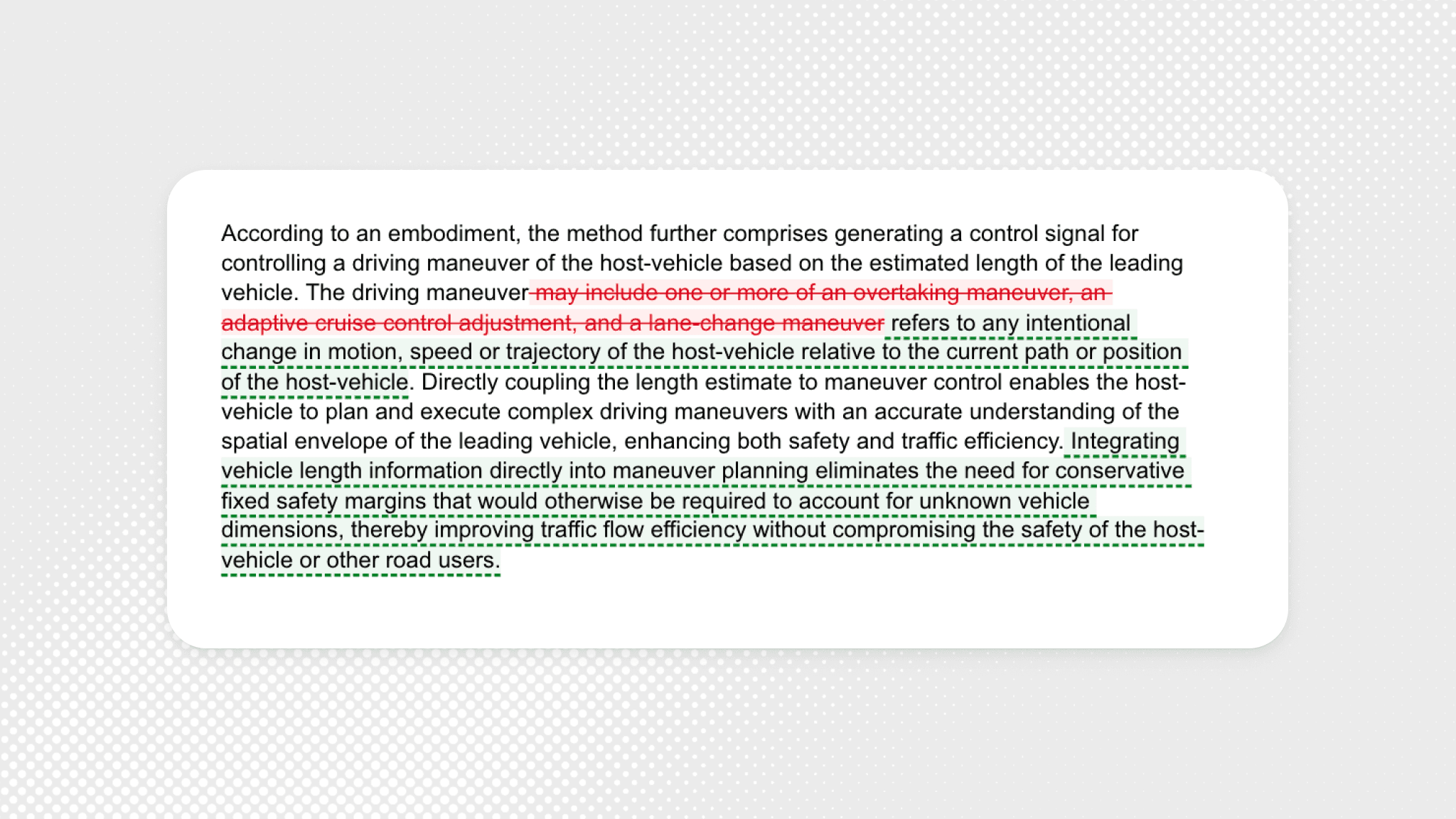
Edits made inside Ankar remain fully reviewable, allowing attorneys, partners and clients to collaborate exactly as they do today, with AI acting as an assistant throughout the drafting process instead of introducing a separate workflow.
Go beyond Word where it matters
Word compatibility means patent teams don't have to choose between existing workflows and more powerful ways to draft.
Inside Ankar, you can build on the AI-powered workflows that are already accelerating many patent professionals’ daily work, including:
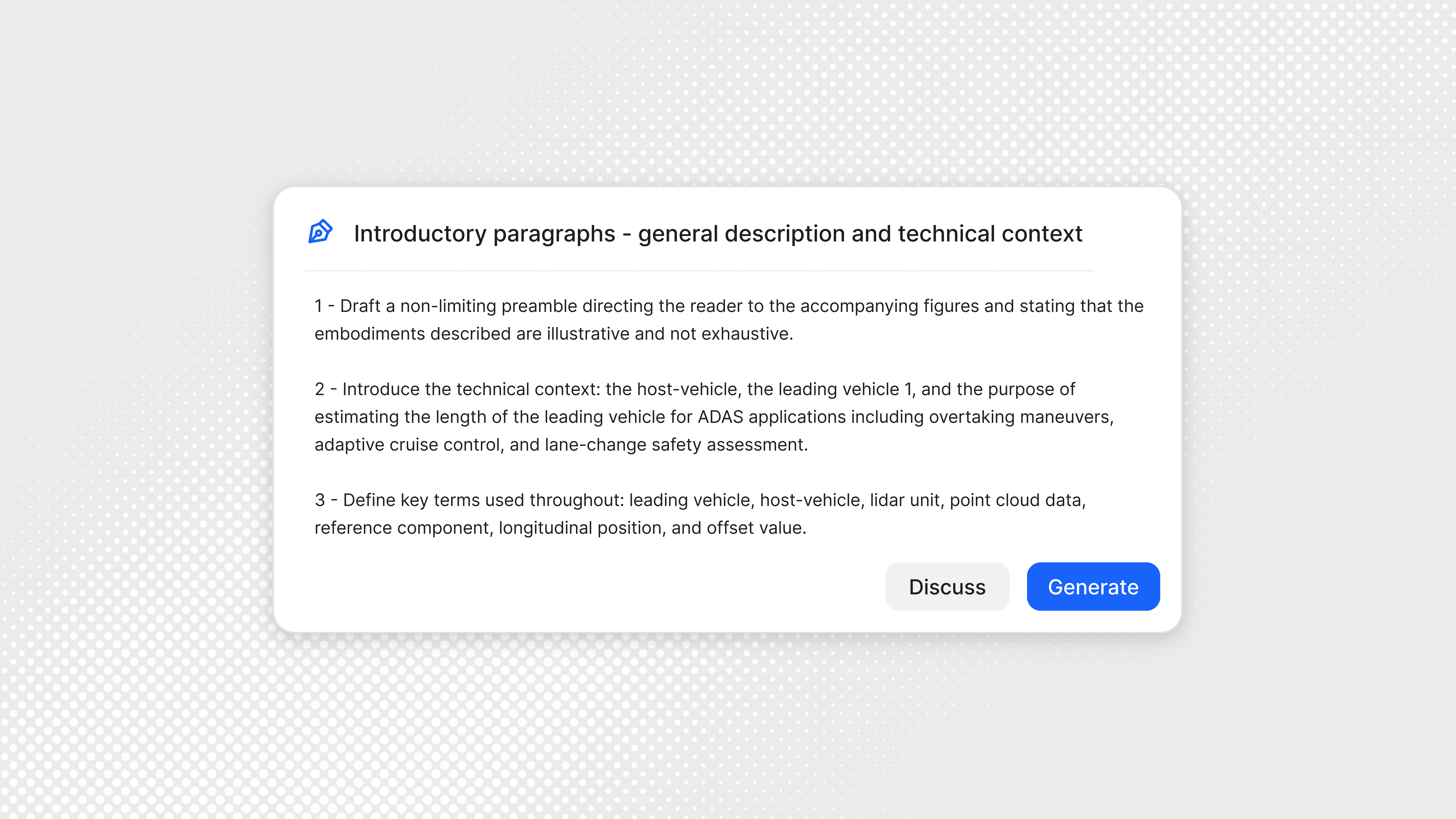
Plan mode: Define the draft's sections, iterate on the plan, then write with AI.
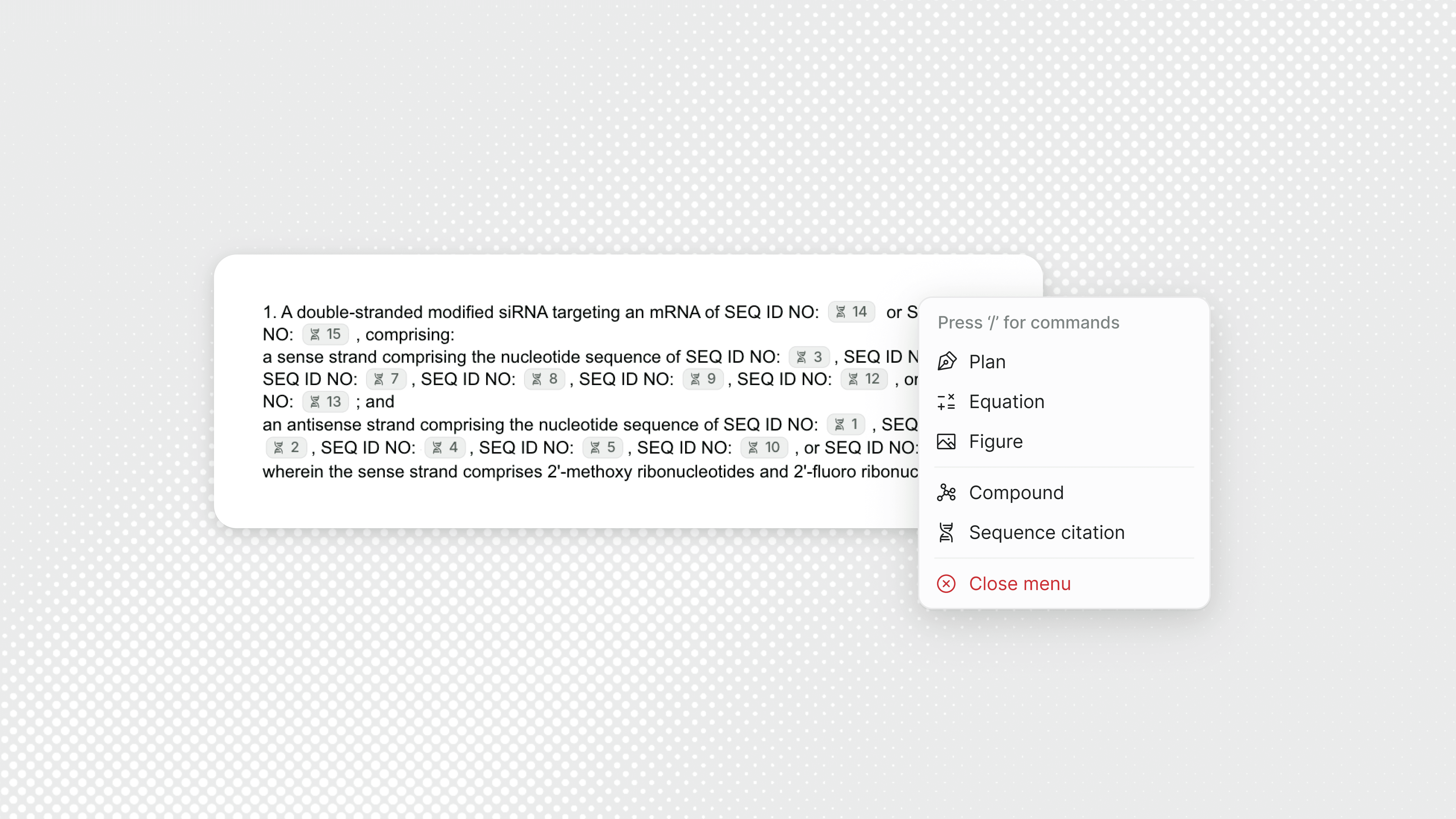
Sequence Citations: Cite sequences using live references that link directly to their corresponding sequence entries. References update automatically whenever the sequence listing changes, ensuring citations remain accurate and consistent.
This redesigned editing experience reflects a simple principle: adopting AI shouldn't require changing the way patent teams already work. By combining high-fidelity Word compatibility with AI-native drafting, review and citation workflows, Ankar lets firms keep the document formats, templates and review processes they already use while benefiting from a fundamentally more capable drafting experience.
Subscribe to our Newsletter
share
read next

CAFC Reverses PTAB Invalidity Findings in Google Hotword Detection Patent Dispute with Sonos
The U.S. Court of Appeals for the Federal Circuit (CAFC) issued a decision on June 9 in Google LLC v. Sonos, Inc., reversing Patent Trial and Appeal Board (PTAB) final written decisions (FWDs) that held claims of two Google patents unpatentable. The court found the Board’s anticipation findings were not supported by substantial evidence and remanded the case for further proceedings.
Read now

Senior Patent Partner Joins Ankar as Head of Patent Innovation
Harm van der Heijden is to join Ankar AI as head of patent innovation after 17 years in private practice
Read now

Federal Circuit Upholds No-Infringement Ruling in Actelion Epoprostenol Patent Dispute
The U.S. Court of Appeals for the Federal Circuit (CAFC) on Wednesday issued a precedential decision, affirming a district court ruling that Mylan Pharmaceuticals Inc. did not infringe two patents owned by Actelion Pharmaceuticals Ltd. covering a lyophilized epoprostenol formulation used to treat pulmonary arterial hypertension. The decision centered on how a single claim term, “a pH of 13 or higher,” should be measured, and whether Actelion could pursue infringement through the doctrine of equivalents.
Read now