
BLOGS
Senior Patent Partner Joins Ankar as Head of Patent Innovation

Preston Teng
Narratives, Ankar
0 MIN READ

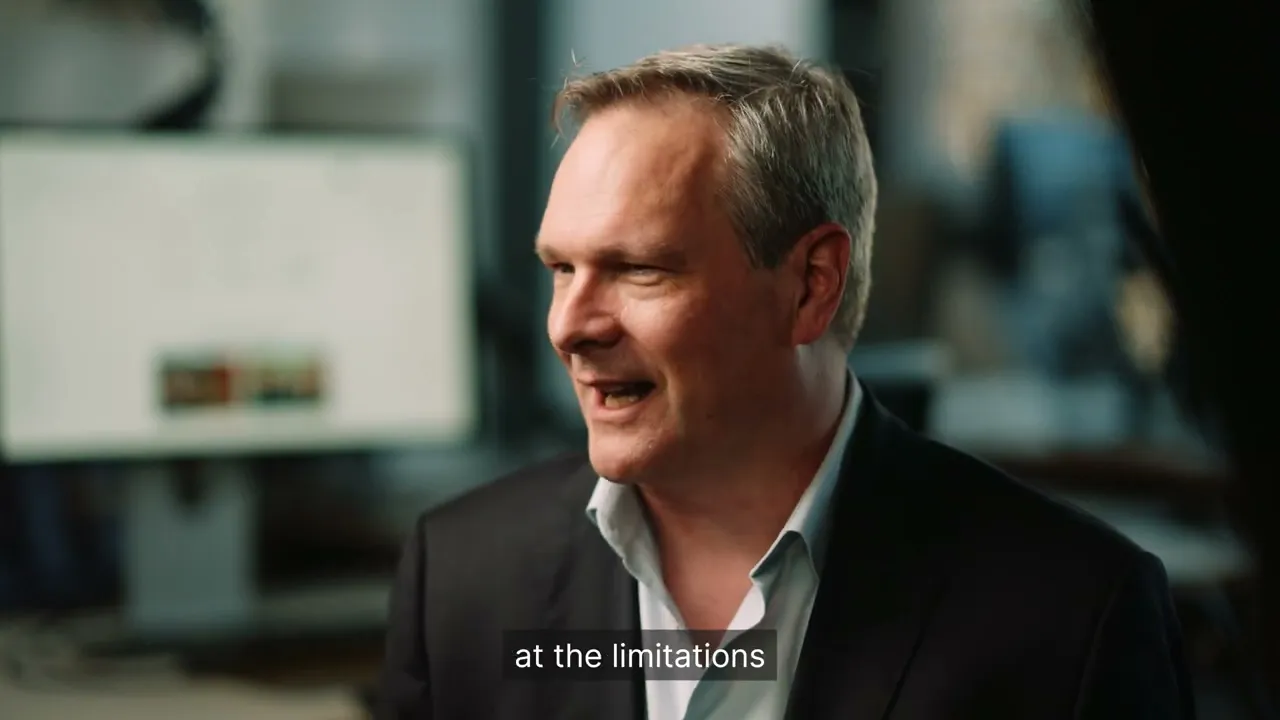
Ankar has appointed Harm van der Heijden as its first Head of Patent Innovation, marking a significant step in the company's mission to redefine how patent and innovation professionals work with AI.
Van der Heijden joins Ankar after nearly two decades in private practice, where he built a reputation as one of the industry's most forward-thinking voices on the practical use of technology in patent prosecution. In his new role, he will work closely with Ankar's product and engineering teams to identify emerging practitioner needs, improve workflows, and help shape the next generation of AI-powered patent tools.
The appointment reflects a broader shift taking place across the intellectual property profession. As AI moves from experimentation to everyday practice, experienced practitioners are increasingly looking beyond traditional career paths and toward opportunities to help build the technologies that will define the future of the profession.
"Patent attorneys are entering a new era," said van der Heijden. "For a long time, the profession had two main destinations: private practice or in-house. Today there's a third option emergin - helping create the tools that practitioners themselves rely on."
Before entering the patent profession, van der Heijden earned a PhD in computational physics and worked as a researcher, developer, and systems architect. While building a successful career in intellectual property, he maintained a deep interest in software development and process innovation, creating internal tools and exploring ways to improve how patent work is performed.
That combination of technical and legal experience made the opportunity at Ankar particularly compelling.
"I was fortunate enough to witness the rise of the internet firsthand," he said. "AI feels even more transformative. I didn't want to watch this change from the sidelines. I wanted to help build it."
Van der Heijden believes AI's greatest impact on patent practice will not simply be efficiency gains, but allowing attorneys to spend more time on the highest-value parts of their work.
"AI is exceptionally good at reading large volumes of material, organizing information, and executing repetitive drafting tasks," he said. "What it doesn't do well is strategy, judgment, or solving difficult legal problems. That's where experienced attorneys add value."
According to van der Heijden, the most successful firms will be those that learn how to combine both strengths. By automating routine work, attorneys can focus more deeply on claim strategy, invention analysis, office action responses, and client counseling.
One area that particularly impressed him about Ankar's approach was its focus on traceability and source verification.
"Patent attorneys need to understand where information comes from," he said. "If AI produces an answer, you need to be able to verify it quickly. Being able to trace outputs directly back to source material makes a world of difference."
At Ankar, van der Heijden will serve as a bridge between practitioners and product teams, helping ensure that new capabilities solve real-world problems and fit naturally into existing workflows.
As adoption of AI accelerates across the profession, van der Heijden believes the question is no longer whether patent attorneys will use AI, but how effectively they will integrate it into their practice.
"The firms that understand where AI adds value, and where human expertise remains essential, will be best positioned for the future," he said. "That's the future we're helping build at Ankar."
Subscribe to our Newsletter
SHARE
read next

Enhanced Drafting in Ankar with Native Word compatibility
Today, we're introducing a completely redesigned editing experience in Ankar for seemless compatibility with Microsoft Word, further enhancing our existing suite of advanced document editing capabilities.
Read now

CAFC Reverses PTAB Invalidity Findings in Google Hotword Detection Patent Dispute with Sonos
The U.S. Court of Appeals for the Federal Circuit (CAFC) issued a decision on June 9 in Google LLC v. Sonos, Inc., reversing Patent Trial and Appeal Board (PTAB) final written decisions (FWDs) that held claims of two Google patents unpatentable. The court found the Board’s anticipation findings were not supported by substantial evidence and remanded the case for further proceedings.
Read now

Federal Circuit Upholds No-Infringement Ruling in Actelion Epoprostenol Patent Dispute
The U.S. Court of Appeals for the Federal Circuit (CAFC) on Wednesday issued a precedential decision, affirming a district court ruling that Mylan Pharmaceuticals Inc. did not infringe two patents owned by Actelion Pharmaceuticals Ltd. covering a lyophilized epoprostenol formulation used to treat pulmonary arterial hypertension. The decision centered on how a single claim term, “a pH of 13 or higher,” should be measured, and whether Actelion could pursue infringement through the doctrine of equivalents.
Read now


